This is not a reductionist article, and even less a philosophical one. What I'm doing here is laying out, in exacting terms, what is probably already implicit in logic, and even more so in physics, but which, perhaps, just perhaps, is being ignored.
First, I want to propose that you don't take an initial stance, only that you read with an honest, impartial view. Leave room for internal questioning, since the only absolute is love, as a cohesive force.
It seems scientific rigor abides by convention under a paradigm as interesting as it is stubborn — in a certain sense —. This stubbornness lies in the very structure of its rigor. Because conventions are what limit the approach, ultimately cornering discernment, like a neurophysiological maneuver. And yet, ambiguously, those same limits are also what allow one to transcend into disruptive territory, since without them there would be no limits to break, nor Nobel prizes to award. This paradox is what gives life, because without it there would be no experience. So I correct myself, and say that the rigor isn't in the structure, but in the obsessive stubbornness of holding on to that structure of rigor.
This attitude belongs to a mental state in entropy. But as thermodynamics rightly describes, entropy is just one of four states. In vedanta, that state is recognized as a mechanism of action, though only if well managed. Otherwise it's a prison. In physical terms, if entropy isn't used as a mechanism of action, overheating will start burning everything down. But what does this mean?
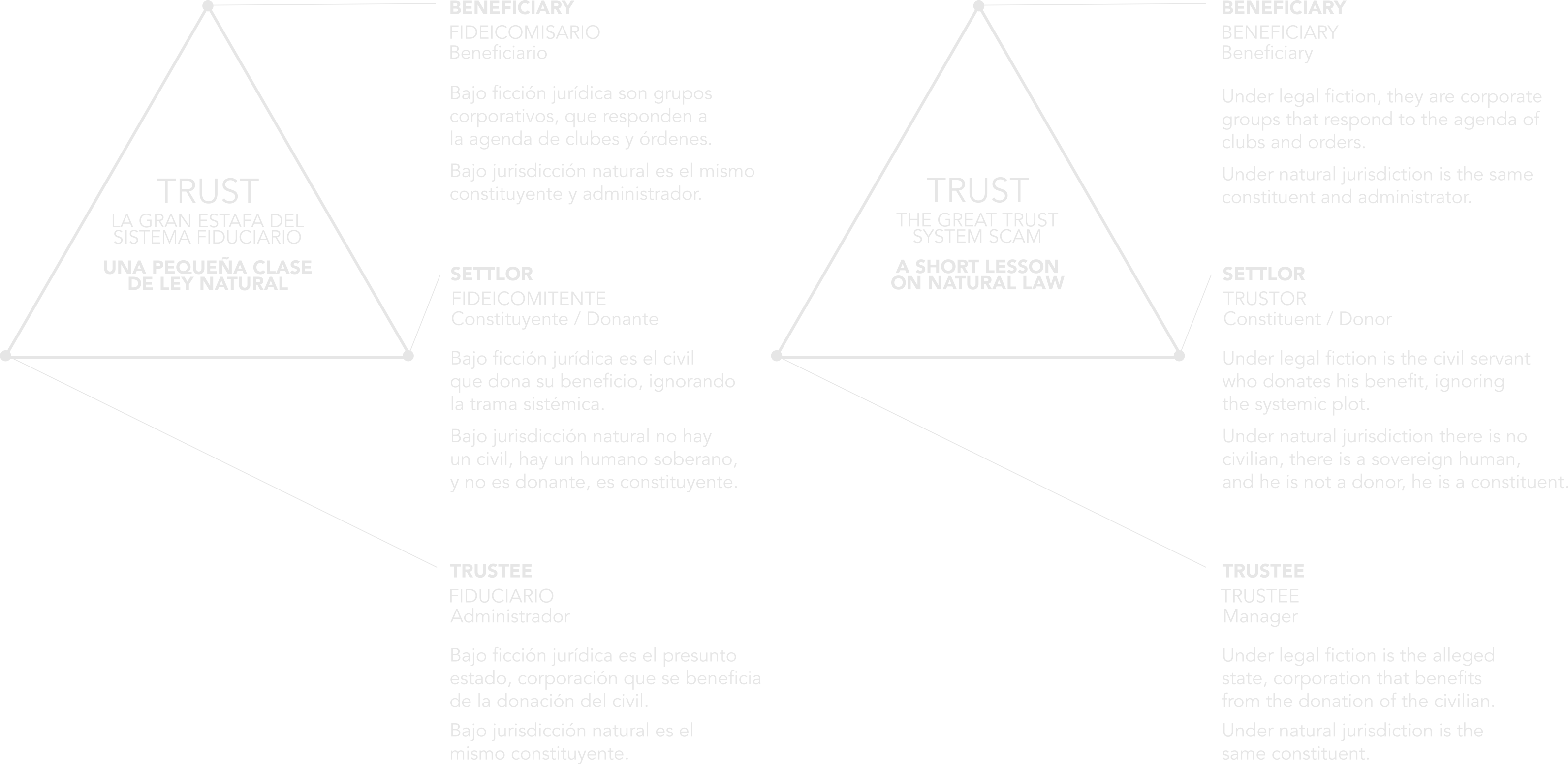
In neurophysiological terms, and later socio-cultural ones, this overheating brought on by science's stubbornness amounts to mass mental manipulation, because any structure that sets out to become a dominant paradigm subjects the individual to what natural law calls "diminutio capitis," altering their discernment — the individual feels diminished before these structures, feels afraid, and believes they need external validation —.
But wait, to be fair, we could consider that no such manipulation exists at all, and that it's really the individual's lack of discernment that determines whether or not they get manipulated. So this dual game is something we'll always find in every aspect of life. And guess what, it has a physical logic to it, it isn't philosophy. We'll get to that.
In light of the above, one could say that this framing of the obsessive stubbornness of the scientific paradigm is relative, since, while in one sense it would amount to a limitation aimed at maintaining order and a certain coherence, it would also invite disruption. It would be something like a necessary evil. It's a rhetoric that plays out constantly.
Beyond structures, paradigms, and conventions, what allows for evolution is the individual's own neural function in a process of optimization, as a unit of consciousness experiencing singularity. And isn't that beautiful, because that very same function is what places blocks in place, meant to be transcended. So far, this article sounds romantic, but we're only now arriving at its "rigor."
Now I want us to conceptualize, to put things in order. If conventional science requires measurements and demonstrations, it's because it seeks external validation, in order to contrast. There's a need there. That's what consciousness does: it seeks contrast in order to understand itself through its own reflection. So, following this logical reasoning, I'd like you to identify this science as exogenous science. It studies parameters externally, rationally, analytically. An intellectual approach based on segmentation.
In parallel, we would have what could be called endogenous science, which studies things internally, emotionally, reflectively. An intelligent approach, absolutely empirical. One example of this science is the Yoga Sutra, which has been teaching for thousands of years how to activate and master internal bioelectric engineering.
Notice this: exogenous science has published hundreds of papers and studies about this endogenous Yogic science, granting it a certain place through neuroscience and quantum physics, but with a bit of reluctance, because since they apply their own rigor to it, it remains something exogenous — they're still searching for validation. And of course, since endogenous science doesn't carry the rigor of seeking validation, only of self-validating, there's no compatibility with what's been agreed upon.
The endogenous is what invites you to be your own lab rat, and after being your own experiment, you'll only be able to share a small percentage of it. Maybe 5%, if you're lucky, because experience can't be transmitted. And that is the only real thing. What we call reality may have a predetermined, even agreed-upon configuration, but the collapse of those individual experiences is what ends up giving it its plot, more or less dramatic — that's a topic for another article —.
Studying circumstantial processes the way exogenous science does is beautiful, and to me it's an art, but as with any art, there's the work and there's the artist. The work is what's seen. And what's seen is only a small part of the potential put to use. That potential is the artist. So, to claim that only the work should be called science, while the artist is denied as science, is more than absurd — it goes against the laws of physics, and I'll explain that now. But first let me tell you something else: this doesn't just mean the artist is part of science, it means the artist is "the first science." The work, then, is the secondary effect of this first science; it's the product, it's that external thing we work so hard to study. And the endogenous? Do you study that? Keep in mind that to study means to apply. Interesting, isn't it?
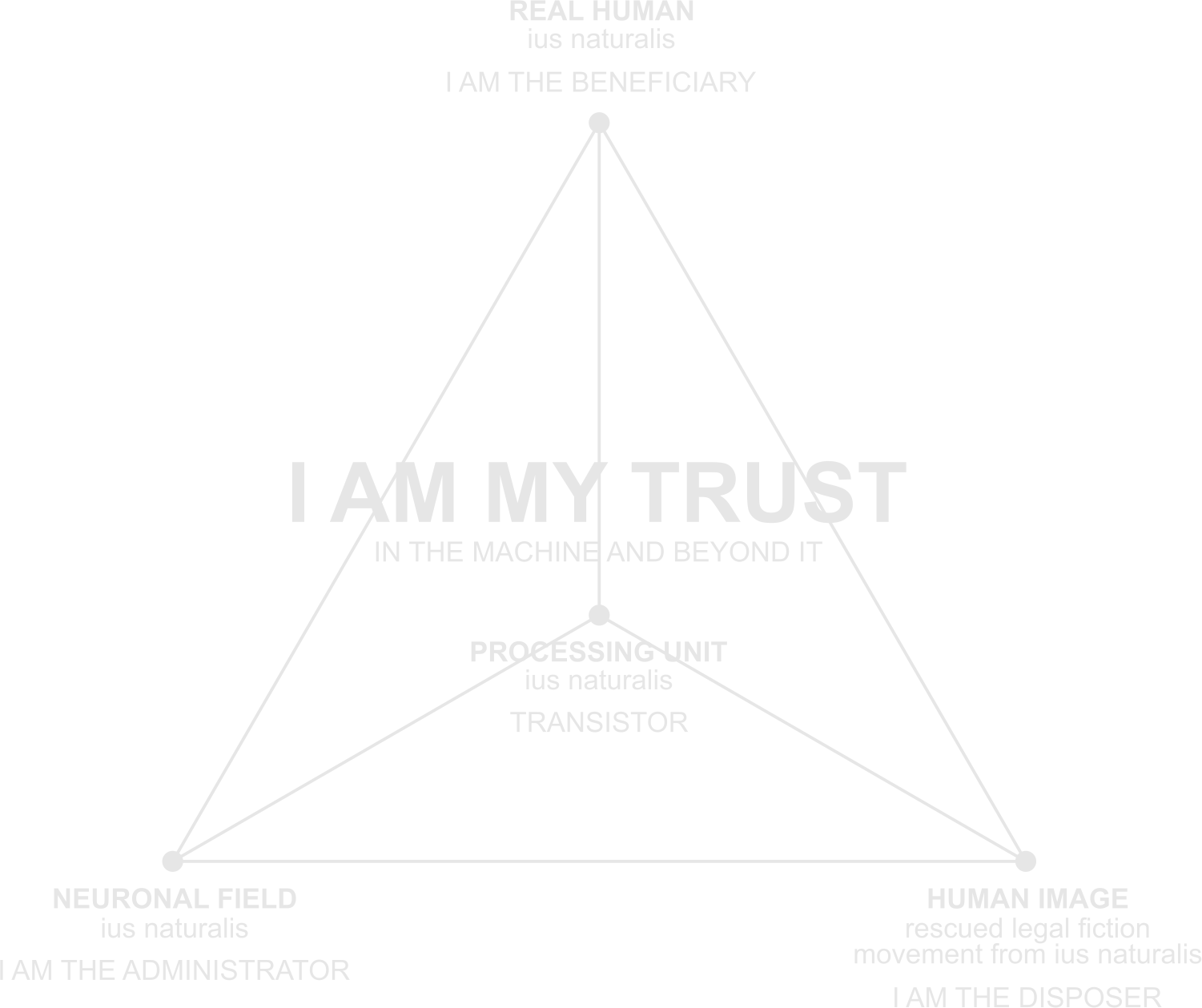
Let's move on to physics. We already have two elements: exogenous science and endogenous science. Incompatible at first glance. But according to Watt's law, together they can become power. If the endogenous is potential (V) and the exogenous is what flows as current (A), the product of the two is true power (W) — V · A = W —. It's a simple equation, validated by convention, just the way exogenous science likes it. And notice something: the order of the factors would change the outcome. Electric current flows from a potential, which we know as voltage. Without an initial potential there is no current. You plug an appliance into an outlet, because that's how you're requesting that potential — or does the outlet on the wall ask the appliance for electricity?
Understanding this, we know the right order generates power. In Yoga, this is known as kundalini, a system whose stabilization requires a great deal of discipline to master. But what I want to say is, if there's no order, there's only dissonance, electrical noise. And that's what we see in everyday life: dissonance between sciences. They simply need to openly acknowledge each other, and that coherence will generate a powerful shift for humanity. What does this imply? That as sovereign individuals with discernment, we shouldn't submit to diminutio capitis. In other words, observe yourself whenever you feel you're waiting for someone else's validation, and especially if you're waiting for the validation of a fictitious structure, like a government body, an institution, or a paradigm — political, religious, scientific, or economic. These last four paradigms represent the four mental functions of consciousness, and mastering them is what vedanta has been trying to teach for thousands of years, in a more endogenous than exogenous way.
I say observe yourself, because that will open the door to reflection, which will let you stop and reconsider. Understand that diminishing yourself isn't natural. What's natural is adopting a syntergic neural field, meaning a coherent one, and where there's high coherence there's no fear, no threats, no instinctive biological response running your system. The limbic brain taking precedence over the reptilian one produces a coherent result in the neocortex (validated by exogenous science — ha —). This reflection shouldn't lead you to confront what at first seems to diminish you, but rather should lead you to learn how to interact with it. Getting angry at a system puts you right where that system's algorithm has already predetermined for you. Dance between the predictable and the hack, like true power, like strands of DNA.
In conclusion, we could say that failing to understand the order and synergy of duality narrows the probabilistic margin of experimentation, and with it, that of theorizing. Because if the procedure excludes the experimenter themselves as the first sense, there's already a clear physical and logical penalty right from the start.
We've reached the end, I hope you've enjoyed it. Thank you for reading me. And remember… nothing personal.