First of all, note that serotonin and dopamine are key neurotransmitters for the central nervous system. Every synapse (neural connection) releases serotonin, and afterward the same system reuptakes part of that neurotransmitter, since this naturally optimizes its functions. That is precisely what science manipulates meticulously through medication, which of course impacts dopaminergic function and the central nervous system.
With that understood, to grasp the physical logic behind the use of psilocybin and its therapeutic application, I'll first clarify a few technical aspects. I've reviewed studies and articles published in scientific journals in which exogenous neuromodulators (medications) are used to treat stress and anxiety, and I've noticed that the principle used is to inhibit serotonin reuptake during synapse, and in some cases noradrenaline as well, expecting a better and more fluid neural response. Eventually they achieve it, because results show that boosting 5-HT (serotonin) neurotransmission decreases sensitivity to negative feedback and increases sensitivity to reward (positive feedback), while reducing it has the opposite effect. However, this modulation has to be just right, because an exaggeration in either direction is unfavorable — you can't inhibit too much or too little, and that's where the adjustment of medication type and dosage comes in. The side effects are broad and alter biological functions to a greater or lesser degree, since the reuptake mentioned would be counterproductive for amino acid production, and the physiological dynamic would suffer cascading alterations. Up to this point the use of neuromodulators seems more or less positive, but the nature of the manipulation used in these trials is generally biased and doesn't account for all the neurophysiological aspects it should, at least in my view, and now I'll explain why.
These studies take a biased approach, because they try to correct serotonergic function exogenously by manipulating bioavailable serotonin, thus invasively modifying the neurofunctionality and physiological dynamic mentioned above. And of course, by assuming that serotonin is metabolized solely from the amino acid tryptophan, it's taken for granted that this amino acid isn't produced through a full endogenous process — meaning the human body doesn't generate it on its own, but rather obtains it only through diet. While this is correct, tryptophan isn't the best 5-HT agonist; in other words, it isn't the most efficient way to produce serotonin. The most efficient path for serotonergic production and function is closely tied to pineal gland function, the hormone melatonin, and DMT — it's just that no one has set out to prove it, or it hasn't been published, and of course I may simply be unaware of it. Many scientists accept this as a possibility, I assume others deny it, and there will be those who hide it. In any case, treatments focus on modulating connections based on existing serotonin, running counter to the neurofunctional processes that stimulate the super-secretion of melatonin (True Yoga). Again, what I mean is that, with yogic discipline, we can use more DMT (endogenous) than tryptophan (exogenous), which increases neuromotor autonomy and homeostasis (balance).
So, let it be clear that the least efficient pathway for 5-HT production is through the metabolism of the amino acid tryptophan, which is obtained only from food. For that, this amino acid needs to be absorbed in the intestine, competing with others, which means our system doesn't manage to take in enough of it. It also has to cross the blood-brain barrier to reach the brain. On top of that, it's said that the nine essential amino acids, tryptophan included, aren't produced by the human body and are obtained only exogenously. All of this is true, but only in part, because as I've already mentioned, the exogenous route isn't the only one, and it isn't the most efficient. The main pathway is through melatonin and its metabolism into dimethyltryptamine (DMT). DMT should be the primary 5-HT agonist, tryptophan second — but it turns out that a great deal of discipline is required for the pineal gland to function properly. Because, again, melatonin is a secretion of that gland, and this hormone's function is always discussed in relation to regulating the circadian cycle (sleep), while its metabolism into DMT is never mentioned, because according to some, no such thing exists. Denying this is science's worst mistake. For some this is already obvious — as it is for me, since without that function I couldn't give my therapies.
If you truly understand what I'm saying, you can work out that conventional nutrition concepts are also biased and highly relative, since they focus on food as the main method for obtaining amino acids, proteins, and carbohydrates. This doesn't mean nutrition is a complete lie, because that uptake from food does exist — but nutrition rests on a flawed foundation, and it does so because the human body itself can broadly generate essential amino acids from DMT, which through a cascade effect are then converted into proteins and carbohydrates.
Food intoxicates us, to a greater or lesser degree. Some foods carry very low toxicity, but bringing substances into our body implies a certain degree of intoxication either way. Oxygen too, in fact, because an excess of it leads to alkalosis, an acid-base imbalance. Oxidation is of course part of cellular cycles, and the less toxic what we take in is (in quantity/quality), the fewer free radicals (harmful residues) there'll be to eliminate. Excess leads to severe intoxication, and an excess isn't just a matter of quantity but of frequency too, without dismissing the qualitative factor (the quality of the food). Food addiction makes us sick, whatever the food may be. Prolonged fasting detoxifies, because it gives the system room to reset itself. So notice that the balance sits between hunger and illness. If we detoxify progressively, we can go day after day without eating — we don't need to, but it's part of instinct, and it's good to integrate it, only it has to be done with autonomy. Electrical impulses (EGO) shouldn't control our responses, since that lack of autonomy reflects anxiety, and eating out of anxiety isn't good for our nervous system. Food should be taken in through a subtle response, by clear, personal decision. So from now on I suggest you eat very slowly, and keep it clear that food is a secondary nourishment, with DMT as the primary one. Observe, discern, decide.
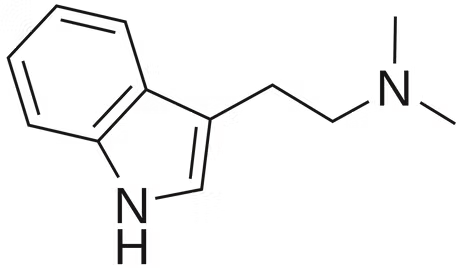
At this point I can already bring in autonomy and the pineal gland. Many foods are designed to calcify this gland, and if we don't stimulate it either, it atrophies. Pineal means "sacred antenna," because it modulates the signal to sync with our original genetic code. It's the third movement of the key, or Kybalion. Once the three secret movements are completed, the neurofunctional processes toward supraconsciousness activate, and they're unique to each person. Melatonin is the hormone that regulates the circadian rhythm through the parasympathetic system (vagus nerve). To be brief, melatonin metabolizes into dimethyltryptamine, and many scientists know this by deduction, others are skeptical, but as I mentioned earlier, no official demonstration has been put forward — or maybe it has and I simply don't know of it. It's something that could be verified using any yogi or sufi as a volunteer. Dimethyltryptamine, or DMT, has exactly the same molecular formula as psilocin (C12H16N2O). When we use psychedelics like mushrooms, the body metabolizes psilocybin into psilocin, which is DMT — meaning it's the same thing. Entheogens like mushrooms would be our exogenous option, but the human body generates its own DMT from melatonin.
Understand this: if we generate our own hallucinogen, we can experience the effects of mushrooms without consuming them, and that's really how it works. This stimulates the same 5-HT neural receptors that mushroom psilocin does.
Psilocybin metabolizes into psilocin, and both are analogous to dimethyltryptamine (DMT). Over 90% of serotonin is generated in the gut, the rest in the brain, and this happens readily given the sheer quantity of dimethyltryptamine involved, unlike the clumsy absorption of tryptophan, which has to cross the blood-brain barrier to reach the brain and compete with other amino acids to be absorbed in the intestine.
To truly stimulate the pineal, secret tantric practices are essential, but you can start with something simple, essentially doing nothing — in other words, intermittent but prolonged fasts, 24, 48, 72 hours, for example. Ideally a dry fast for the first 24 hours. Eating habits obviously have to change and be reduced, which calls for discipline and, above all, willpower, even though it's ironic to think that "doing nothing" requires willpower.
In conclusion, the secret to secreting large amounts of melatonin, and therefore DMT, is a combination of habits like the ones mentioned. The quantitative factor of endogenous melatonin won't cause excess or imbalance — imbalances only occur through exogenous action; everything is perfect and our system is intelligent if we remember how to use it. In group sessions, the incorporation of psilocybin in macrodoses (exogenous) is measured according to the individual's body weight and psychological condition — there are no excesses. Generally around two grams is used, which can be doubled for some people. Both tryptophan and DMT contribute to the immune system through anti-inflammatory processes, though I suspect they do much more than that, and I say this because I am the living testimony. For years, unexplained repair processes happened in me that I only understand today, along with excellent health, and of course constant psychedelic sensations when I give my therapy — and even when I don't.
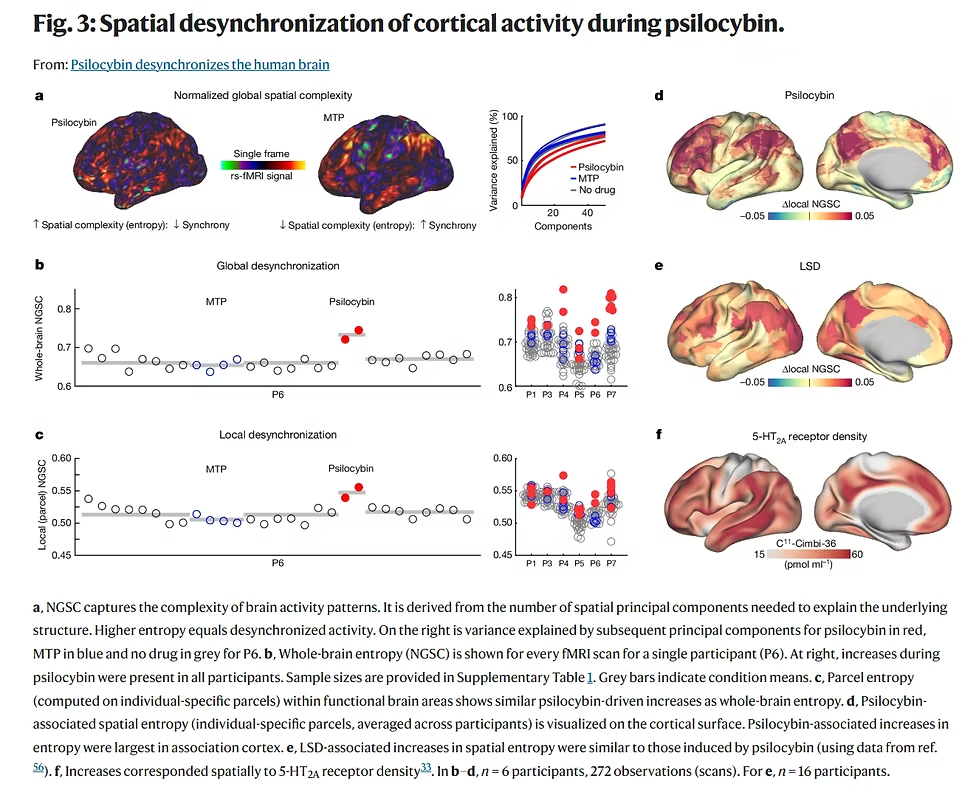
There are studies that develop interesting aspects of the therapeutic application of hallucinogens. However, the controlled settings in which these trials and therapies are conducted are framed within conventional science, which doesn't grasp the principles of extrasensory physics, let alone master them. These principles are fundamental to the use of entheogens, given that their biochemical effects respond to electro-molecular charges, and these in turn to electromagnetic physics, which true parapsychological science does master. High DMT levels enable a synaptic condition that desynchronizes the brain, and this is what triggers hallucination — which basically means "seeing the information that surrounds us through our original code" (hallucinogen relates to the gene). Science calls this phase "brain entropy," and I do like that label, since it results from generating altered states of consciousness. Under these states, with parapsychological therapeutic assistance, breaking through neurosis (patterns) is made easier. Entropy refers to a revolutionary transition, because perception sharpens and the information can be confusing. Nothing the patient perceives during a well-conducted therapy session is false, but it can happen that they lack the skill to interpret the information correctly. Scientific approaches call this the "subjective effect," because they clearly fail to recognize its objectivity.
According to certain studies, 5-HT receptor agonism (serotonin generated from DMT) works to desynchronize pairs or populations of neurons that co-activate under typical conditions. This is what I just mentioned — breaking neurosis — since those typical conditions are the responses our brain is used to giving, but under the effects of psilocybin they desynchronize to increase brain entropy or randomness, and activate homeostatic plasticity mechanisms (balance). Another interesting thing is that psychedelics rapidly induce synaptogenesis in the anterior hippocampus and prefrontal cortex, achieving an effect similar to antidepressants.
Mushrooms belong to the fungal kingdom, not the plant one. But entheogens exist in both kingdoms. In simple terms, an entheogen is something that produces psychedelic effects. You could also say ente-o-gen-o means "divine origin." It's fair to think of this process as "psychedelic," if we understand that psyche means "breath or spirit" in Sanskrit, though in Greek it's "human soul." Meanwhile, "delic" refers to an "evident manifestation." In short: "the spirit becomes evident."
It's very important to understand that psilocybin is only a neurofunctional enhancer. So, what state is that function in for you? What are you going to enhance? If this entheogen were the key to awakening, it would be a very easy game, and it clearly isn't. I understand that DMT helps create new electrical connections, breaking down the chemical ones that generate patterns, but if we don't give these hallucinogenic processes a direction, the new connections will be misleading, and will form similar chemistries — meaning neurotransmitters in line with the previous ones. Because of that, we might improve certain intellectual responses, but that will tangle us up even further in the circumstantial processes of our particular life. The guidance during these psilocybin retreats revolves around the pulsion of the ether (true hypnosis), so the patient feels love within themselves, and the new neural connections develop around that.
Given all of this, what I propose in my group macrodose therapies is to assist in the entropy process the patient goes through during the experience, ordering their energy field to strip out electrical noise, so they can establish their own direction on their own. I carry out my service in full autonomy and unlimited responsibility, because I know how to proceed and I understand what I'm doing. In part, these therapies take the format of a clinical trial.
Entering altered states of consciousness should be a habitual practice for everyone, with no need for the exogenous, no need for psychoactives, but always oriented toward love, with discipline. It's the natural way to recover our potential and free the Hydra consciousness. That said, and in keeping with what's described above, there are those who feel they need a small external stimulus, and it's perfectly fine to feel that way. Entheogens exist for those cases, and they're natural — they involve no industrial process. After all, individual experience needs contrast, to see its own reflection and understand itself, which is why we need the other, in one way or another.
Psilocybin stays in the blood for 6 to 8 hours, a window during which acute neurobiological changes are experienced. These changes can then continue, mild but persistent, for up to three weeks.
References
Bari, A., Theobald, D., Caprioli, D. et al. Serotonin Modulates Sensitivity to Reward and Negative Feedback in a Probabilistic Reversal Learning Task in Rats. Neuropsychopharmacol 35, 1290–1301 (2010). https://doi.org/10.1038/npp.2009.233
eClinicalMedicine, Psychedelic medicine and the clinical application of hallucinogens, eClinicalMedicine, Volume 56, 2023, 101891, ISSN 2589-5370, https://doi.org/10.1016/j.eclinm.2023.101891 (https://www.sciencedirect.com/science/article/pii/S2589537023000688)