PROTOTYPE GROUP THERAPY AND FIRST CLINICAL EFFICACY TRIAL. BASED ON NEUROPSYCHOTRONICS, CHIROPRACTIC HYPNOSIS AND MACRODOSE PSILOCYBIN | FEB 2026. JAVI JAMES. ALL RIGHTS RESERVED.
ABSTRACT.
Objectives: To test the efficacy of this format for establishing a therapeutic program. The program seeks to activate, in patients, functional processes that optimize neuromotor autonomy and allow them to transcend their states of consciousness toward an atypical, homeostatic physiological dynamic. In other words, the expected outcome is a cognitive response marked by a high emotional coefficient and low neurosis in typical response patterns. To this end, the chiropractic hypnosis session was chosen to be potentiated with a high dose of exogenous dimethyltryptamine, sourced from the Psilocybe Cubensis mushroom species. In effect, the endogenous DMT metabolized from melatonin is potentiated by the active principle of psilocin, 4-HO-DMT. Note that once psilocybin enters the body, it is metabolized into psilocin. Presented here is a conclusive analysis of the cognitive and emotional states of the group of participants, resulting from group therapy potentiated with entheogens. As this is an unconventional, efficacy-focused prototype trial, the parameters have no specific measurable scales — only testimonial considerations.
Methods: Results were defined based on the rapport established and on the unified field communication achieved through chiropractic hypnosis. Clinical objectivity is based on observation and discernment. Therapeutic follow-up was carried out for two weeks. The macrodose was estimated at 1.8 g for the 4 women, with an estimated body weight of 50 kg, and 2.3 g for the single male participant, weighing approximately 65 kg. The dried mushroom was taken orally with lemon juice. Patients' ages range from 30 to 44. Two of the women were considered somewhat hyperactive; however, their dose was not increased. The psychedelic experience lasts approximately four hours, with active therapy applied only during the first hour.
Results: Most participants' cognitive responses during the session were unmistakably marked by a high emotional coefficient. Active intelligence was thus denoted, with very low neurosis in typical response patterns. Only one of the five patients showed a somewhat nostalgic entropy, which extended into the following day. All participants showed major positive neurofunctional changes afterward. At no point in the program were there violent or unwanted psychic responses. The mushrooms were assimilated flawlessly throughout the experience.
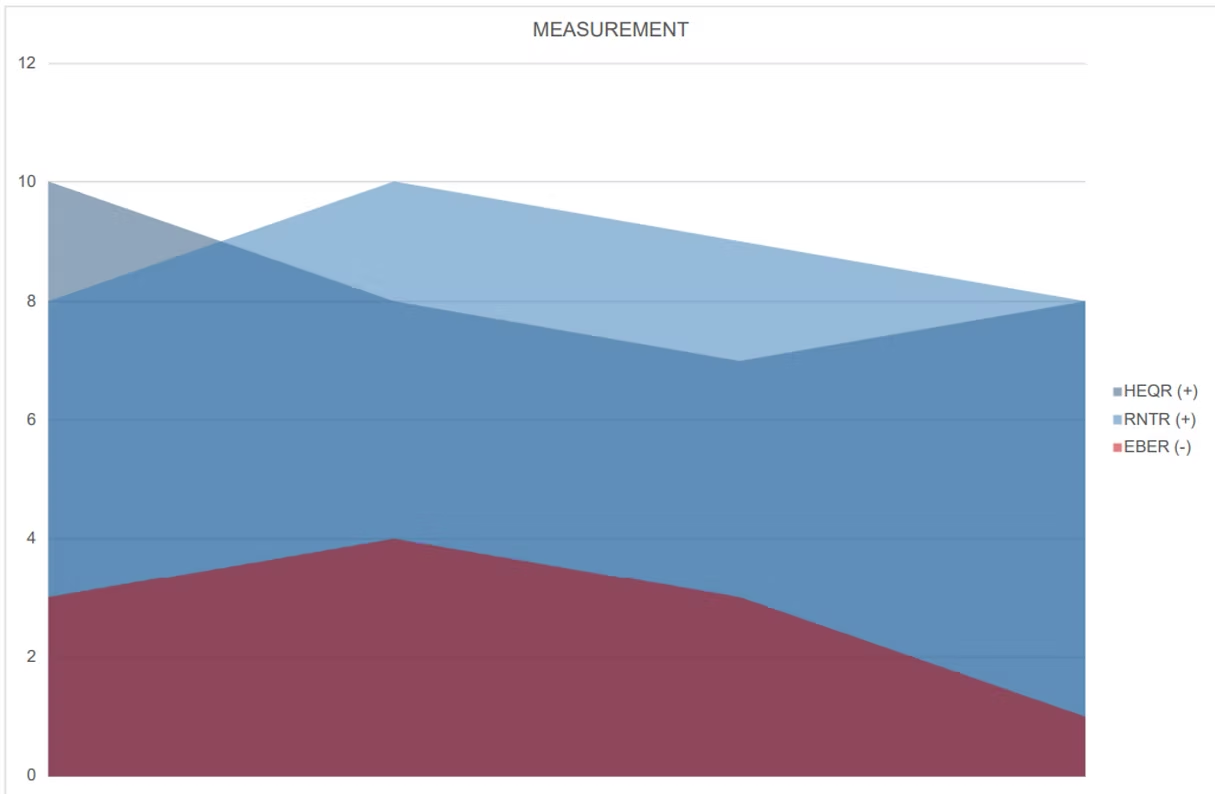
Conclusions: Patients treated with chiropractic hypnosis and macrodose psilocybin showed a broad improvement in cognitive response. Remission of neurosis in typical response patterns was also favored, without exaggerated entropy. Parameter H-E-Q-R (Elevated Emotional Coefficient Response): Positive. Parameter R-N-T-R (Remission of Typical Response Neurosis): Positive. Parameter E-B-E-R (Exaggerated Brain Entropy Response): Negative. The traceability, which may seem subjective, retains objectivity according to the nature of the therapy I facilitate. This reference falls under parapsychology and neuropsychotronics, in a mediumistic capacity. It's worth recalling that, in the nineteenth century, clinical trials focused on the study of the psyche were carried out in spiritism sessions, between mediums and neurologists such as Freud. For Javi, pseudoscience is the folly of science, born of laziness in activating one's own endogenous science. He admires studies published by scientists in journals; however, this is not reciprocal. For the construct, it's easier to look outward and wait for external validation.
INTRODUCTION.
This program's objective is to optimize the patient's autonomy through a synchronous movement of a semi-invasive bioelectric nature. This movement refers to chiropractic hypnosis, potentiated with macrodose psilocin.
During the process, the movement manages to order the patient's electrodynamics, as well as stimulate homeostatic plasticity and the agonist neurofunctional processes of synaptogenesis, giving rise to electrolysis that breaks down the biochemical structures sustaining typical and pathological patterns, more or less neurotic. No violent responses or brain entropy beyond what is desired are experienced.
Nonetheless, the program transcends the clinical, moving toward that original sense of full love that enables healthy living, facilitating acceptance, gratitude, and respect. During the session, the patient manages to listen to themselves like never before, without conditioning. This happens, in part, because chiropractic work manages to remove mental noise, emotional blockage, and any draining system acting on the electroplasm (energy field), altering biological processes.
Both the breaking of the neurotic patterns mentioned and homeostatic plasticity are a consequence of the altered state of consciousness and the brain desynchronization induced by hypnosis — in turn potentiated by exogenous DMT. In psychotronics, hypnosis is understood as a great gap synapse, achieved through correct neuromodulation. It is an exclusive, supraconscious bridge of communication that the individual establishes with themselves, gaining great access to their genetic, or original, potential. This allows them to activate processes that, over the medium and long term, will loosen up the dynamics of neural function, positively impacting their emotional coefficient and, therefore, their intelligence and consequent intellectual function.
Note that while the psilocin macrodose facilitates mycelial-type or homeostatic connections, it does not produce hypnosis per se. Hypnosis must be induced by a specialist, or self-induced in the case of a very experienced meditator with years of practice. The exogenous without the endogenous works only halfway. Javi understands psilocin as a neurofunctional potentiator. The question is: what is going to be potentiated, and what direction is going to be given to that process.
It should be noted that hypnosis, or trance, is produced by an overstimulation of the pineal gland, ordering the secretion of melatonin, which metabolizes into N,N-dimethyltryptamine, or endogenous DMT, an agonist of the 5-HT neurotransmitter and of essential amino acids. 5-HT is better known as serotonin. It bears repeating that the induction of trance happens through chiropractic hypnosis therapy, potentiated with hallucinogenic mushrooms (Psilocybe cubensis), which also stimulate 5-HT receptors. Under these circumstances, and afterward as well, the practice of inhibiting serotonin and norepinephrine reuptake to manipulate neuromodulation would lose its point. This is something that could be verified in a future trial, working alongside psychiatrists, because perhaps, going forward, the patient could be stabilized with St. John's Wort, which has shown itself superior to paroxetine and other medications, also using the sedative option of passionflower, valerian, and lemon balm — addressing, in this way, a dual function for both depression and anxiety.
A technical finding from a study on macrodose psilocybin in a therapeutic context is that homeostatic plasticity enables an interaction between the anterior hippocampus and the prefrontal cortex, producing an antidepressant-like effect. Of course, this is a generic effect, but under the guidance of chiropractic hypnosis, in this proposed format, it is definitely put to use — as if it were a remanence, because the patient is given a progressive way out of the depressive state. In other words, the combination of this therapy plus entheogens, at a high dose, does not function like a medication, and even less like a placebo, but rather as an activator of well-aimed connective processes.
From Javi's clinical therapeutic experience, without the use of exogenous substances, he understands that optimizing autonomy allows one to assign more ordered commands to the central nervous system, which cascades into the endocrine system and all bioelectric chemistry, including the psyche, achieving homeostatic preponderance. With this new format, incorporating psilocybin, the aim is to determine whether potentiating chiropractic hypnosis allows for even more promising results, by accelerating processes. It is important to stress that internal engineering will always take precedence — that is, the induction of self-hypnosis as a great electrical connection with higher consciousness. For that same reason, even though the 4-HO-DMT potentiator far exceeds the dose of endogenous DMT, psilocybin will remain a secondary resource. A universal principle of correspondence.
Many energy therapies such as reiki make use of the same hypnotic and, if you will, chiropractic principle — what varies is the technique, the precision, and above all, the electromotive force with which one operates. That determines the therapy's efficacy. To understand what therapists who work with this technology are doing — though Javi speaks only for himself — one must understand the principle of alternating electrical energy, since the etheric pulse, also known as plasma, or in Sanskrit, prana, hides within its recoil. But it isn't just a matter of pulsion; many factors come into play in achieving precision and electromotive force. Mastery of extrasensory abilities such as mediumship, telekinesis, and so many others takes years of training. Of course, as a therapist, one must begin by setting the example in every respect, and since nothing here is exact — though it is constant — the precept of setting the example points to a life lived with more order than disorder, in a relationship that may oscillate around 80:20, like Pareto's law.
METHODS.
Study design.
The trial involved a group of five individuals who gave written consent. It took place in a mountain house where silence and nature predominated. Each participant was administered between 1.8 and 2.3 grams of dried Psilocybe Cubensis mushrooms, orally, all after a fast of more than 12 hours. Effects began at an estimated 20 minutes, and therapy was applied immediately for one hour while participants lay down. Over the following 3 hours, chiropractic follow-up was carried out to keep the patient's connection channel clear, along with intermittent psychological support, while participants either walked around the property's grounds or rested, taking in their surroundings. Follow-up continued for two weeks after the session. Only one participant needed remote therapeutic assistance the following night.
This methodology presents a rigor very different from the scientific paradigm — no less relevant for that. And as reductionist as this study may seem, neuropsychotronic science can justify every process within it. Nonetheless, these processes can only truly be understood through the empiricism of a trained sixth sense. And while chemistry responds to electromolecular charges, those charges respond to algorithmic, computational instructions that transcend biological somatics, reaching toward that remote electrical point of origin that conditions the commands of our central nervous system. Whoever does not master the nature of this internal engineering may lack the objectivity to understand those instances that govern above and beyond the circumstantial processes of physics.
What Javi does as a therapist in this kind of group therapy, beyond inducing hypnosis, is keep the bioelectric space clean and free of interference, enabling the patient a faithful communication with their own consciousness — without noise, without history, and without hysteria.
Participants.
- XXLB — female, 48 kg, 32 years old. Hyperactivity–mild disorders. Dose 1.8 g.
- XXSC — female, 47 kg, 38 years old. Hyperactivity–stress. Dose 1.8 g.
- XXCP — female, 51 kg, 44 years old. Mild psychiatric patient on dual antidepressant. Dose 2 g.
- XXJD — female, 52 kg, 30 years old. Exploration–common emotional conflict. Dose 1.8 g.
- XYAE — male, 64 kg, 39 years old. Exploration–common emotional conflict. Dose 2.3 g.
Intervention.
Macrodose of whole, dried Psilocybe Cubensis mushroom. Administered orally with lemon juice, after a fast of more than 12 hours.
Chiropractic hypnosis therapy. Hypnosis is a consequence of overstimulation of the pineal gland; there is no guidance, no dialogue, no protocols, and the modus operandi is similar to reiki. Chiropractic work here requires no physical contact — it refers to manipulation performed on the energy field, or electroplasm, to repair circuits, or nadis, remove viral agents, and suppress ill-intentioned systems that run from parallel planes by virtue of our erratic, unconscious brain responses. That systemic interaction alters, through feedback, the psyche and biology in general, causing imbalances that manifest through a variety of diagnostic forms.
Efficacy measure, statistical analysis and results.
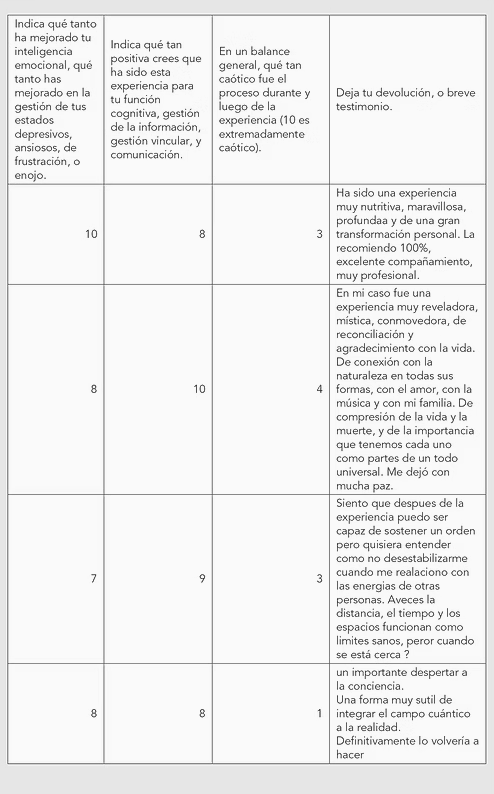
The "safety and tolerability" section details the dosing rationale, which serves as an efficacy measure subject to certain factors. Results were defined based on the rapport established and on the unified field communication achieved through chiropractic hypnosis. Clinical objectivity is based on observation and discernment. No specific parameters were used; however, a simple testimonial survey referencing the parameters mentioned above — H-E-Q-R, N-R-T-R, and E-B-E-R — will shortly be made available.
Safety and tolerability.
No assimilation problems arose during the oral administration of the Psilocybe Cubensis mushroom. No unwanted neuropsychological responses arose either — that is, no exaggerated entropy occurred. The brain entropy present was that of a favorable altered state of consciousness, with great homeostatic plasticity and brain desynchronization.
The hypothesis that body weight is not the sole determining factor of dose was confirmed. It is estimated that dose should also be a function of the electrodynamics of the patient's central and peripheral nervous system — that is, of how impulsive or reactive the patient's responses habitually are. The greater the impulsivity, the higher the dose. Directly proportional. At the electrochemical level, this kind of condition represents an elevated dopaminergic function. These are people who may be prone to addiction. In spiritual terms, that neurofunctional disorder can be understood as an excessive use of masculine energy, where movement and doing are thought to be everything. In correlation, two female patients made it evident that when hyperactivity is present and the dose is not high enough, entropy will not be as elevated either. The following clarification is worth making... what is being attempted with the use of macrodoses is precisely to bring the patient into an altered state of consciousness, with considerable — but always controlled — entropy, and in that way achieve movements that would otherwise be impossible, or very slow and complex. In contrast to these two cases, in a patient with mild depression and anxiety, medicated with a dual antidepressant, it was decided to administer 2 g of psilocybin instead of 1.8, and a substantial decrease in sensitivity to negative feedback, together with a large increase in sensitivity to reward, was observed. In simple terms, it was a clear antidepressant experience, with satisfactory neuromodulation — not only during the session but afterward as well. Although she required assistance in the following days, and the entropy she went through called for deep emotional movements, the sustained decrease in sensitivity to negative feedback was evident, as it favored her will, and as the days passed she grew enthusiastic and began reducing her medication, after consulting with her psychiatrist, who approved the move.
There is a third factor that also comes into play when determining dose, and it's a very important one. This factor lies beyond conventional clinical analysis, as it refers to the patient's mediumistic or extrasensory capacity. The greater the capacity, the greater the likelihood of a certain kind of infection, both electrically and biologically. The lesser the capacity, the lower the likelihood of that kind of infection — though other factors will weigh in instead. The nature of these paranormal conditions is very broad and relative, and cannot be developed further within this trial. The observation surrounding this factor is specific to Javi's specialization in neuropsychotronics, and is the reason why, in this kind of entheogen-assisted therapy, it is considered essential for the attending therapist to be someone who has mastered the extrasensory, the behind-the-scenes — with bioelectric condition being the primary factor behind the somatization of trauma and/or biological psychic defects.
Conclusion.
As mentioned earlier, even though this study does not conform to the rigor conventionally used in science, this work is conclusive. The results far exceeded Javi's expectations. The containment provided was appropriate, without interfering in the patient's own process. Each participant's verbal responses during the session showed a very high intellectual degree, owing to a clear rise in emotional coefficient and an evident neurofunctional systemic balance, which persisted as a residual effect for weeks, definitively changing their dynamic. While the experience is individual, at times they interacted with one another fluidly. Straight from their own mouths, the love they perceived was so great it didn't fit inside their bodies, and the word gratitude felt too small. Other comments included: "I understood everything, my life changed completely." These words held true not only for the experience itself but for the days that followed — including for the patient with mild depression, who, with a force both profound and subtle, is managing to transcend her states.
In light of the results, and in clinical terms, Javi is confident that chiropractic hypnosis with a macrodose of 4-HO-DMT accelerates the processes that lead the patient to reorder their dynamic toward correct neuromodulation, making it an optimal model for patients with depressive and anxiety disorders, including those diagnosed with bipolar disorder and mild schizophrenia. Many of these diagnoses are highly relative and questionable. The exception would be severe disorders involving irreversible defects or brain damage.
It is worth clarifying and reiterating that, in this trial model, chiropractic hypnosis is the fundamental guide of the therapy. It is not an ordinary macrodose psilocybin session.
If you are a psychiatrist or health professional and this study caught your attention, Javi looks forward to hearing from you.
Alternative interventions for future cases.
- Antidepressant: St. John's Wort.
- Anxiolytic and sedative: Passionflower + Lemon balm + Valerian.
- Nervous system stabilizer: Seawater.
- Mood stabilizer: Reishi adaptogen.
- Myelin repair: Lion's Mane adaptogen.
- Electromolecular potentiator and antigenic inhibitor: Chlorine dioxide.
- Antipsychotic and malware inhibitor (ill-intentioned programs): Chiropractic Hypnosis session.
- Biological deworming: Unconventional natural medical treatment. Includes coffee and chlorine dioxide enemas.
FEB 2026, MENDOZA, ARGENTINA | ALL RIGHT RESERVED | JAVI JAMES, SPECIALIST IN PSYCHOTRONICS, ENDOGENOUS SCIENCES AND CHIROPRACTIC HYPNOSIS.
MEASUREMENTS AND TESTIMONIALS.
Value measured from 1 to 10.
References
Bari, A., Theobald, D., Caprioli, D. et al. Serotonin Modulates Sensitivity to Reward and Negative Feedback in a Probabilistic Reversal Learning Task in Rats. Neuropsychopharmacol 35, 1290–1301 (2010). https://doi.org/10.1038/npp.2009.233
eClinicalMedicine, Psychedelic medicine and the clinical application of hallucinogens, eClinicalMedicine, Volume 56, 2023, 101891, ISSN 2589-5370, https://doi.org/10.1016/j.eclinm.2023.101891 (https://www.sciencedirect.com/science/article/pii/S2589537023000688)
Javi James. https://javijamesss.wixsite.com/yoga/setas — THERAPEUTIC PSILOCYBIN MACRODOSE | HALLUCINOGENIC MUSHROOMS. ISSN S/N.
Elsas SM, Rossi DJ, Raber J, White G, Seeley CA, Gregory WL, Mohr C, Pfankuch T, Soumyanath A. Passiflora incarnata L. (Passionflower) extracts elicit GABA currents in hippocampal neurons in vitro, and show anxiogenic and anticonvulsant effects in vivo, varying with extraction method. Phytomedicine. 2010 Oct;17(12):940-9. doi: 10.1016/j.phymed.2010.03.002. PMID: 20382514; PMCID: PMC2941540. https://pmc.ncbi.nlm.nih.gov/articles/PMC2941540/
Appel K, Rose T, Fiebich B, Kammler T, Hoffmann C, Weiss G. Modulation of the γ-aminobutyric acid (GABA) system by Passiflora incarnata L. Phytother Res. 2011 Jun;25(6):838-43. doi: 10.1002/ptr.3352. PMID: 21089181. https://pubmed.ncbi.nlm.nih.gov/21089181/
Campos, V.M.S.; Yabrude, A.T.Z.; Lima, R.D.T.; Wagner, F.; Oliva, H.N.P. A Systematic Review of Neurobiological Mechanisms of Passiflora: Beyond GABA Modulation. BioChem 2025, 5, 21. https://doi.org/10.3390/biochem5030021
Download the multilingual PDF document (Spanish, English, German, French, and Italian)